.svg)


.svg)


.svg)


%201Q26_%20GRC%202029.png)


.svg)

.svg)



As empresas raramente têm dificuldade em traduzir uma única página. O problema é manter o conteúdo multilíngue alinhado entre equipes, ferramentas e atualizações constantes — sem atrasos ou mensagens inconsistentes.
Smartling is an AI-enabled translation and localization platform built to manage multilingual content at enterprise-scale. It connects to platforms across your tech stack, such as Content Management Systems (CMSs), design tools, code repositories, and mais, para uma plataforma de tradução centralizada, que encaminha o conteúdo pelos fluxos de trabalho de tradução e armazena recursos linguísticos como guias de estilo e glossários, ajudando a manter a qualidade à medida que o volume aumenta.
Este guia explica o que significa, na prática, a gestão de conteúdo multilíngue, por que as empresas precisam de um sistema para isso e como uma abordagem de plataforma oferece suporte à governança, consistência e publicação escalável.
O que é gerenciamento de conteúdo multilíngue?
A gestão de conteúdo multilíngue é o processo estruturado que as empresas utilizam para criar, atualizar, encaminhar, traduzir, revisar e publicar conteúdo em vários idiomas, abrangendo equipes e sistemas diversos.
A gestão de conteúdo multilíngue vai além da tradução, adicionando orquestração de fluxo de trabalho, recursos linguísticos como guias de estilo da marca e glossários, e governança para que a voz da marca e a terminologia do setor permaneçam consistentes à medida que os idiomas mudam.
A Smartling apoia esse modelo operacional fornecendo uma plataforma centralizada que gerencia a tradução de ponta a ponta, permitindo que os usuários entreguem conteúdo multilíngue de alta qualidade em grande escala, ao mesmo tempo que acelera o processo automatizando tarefas rotineiras e usando tradução por IA.
Por que as empresas precisam de um sistema de gerenciamento de conteúdo multilíngue?
Em escala empresarial, os mesmos problemas surgem rapidamente:
- Fluxos de trabalho fragmentados entre as partes interessadas, causando atrasos à medida que o conteúdo passa das equipes de marketing ou desenvolvedores para tradutores e revisores.
- Lacunas no controle de versão (o que mudou, onde e qual idioma é o “atual”)
- Atrasos e mensagens inconsistentes quando os ciclos de revisão são feitos por e-mail e planilhas.
- Riscos de conformidade e regulamentação quando as aprovações e os processos de auditoria não são padronizados.
- A erosão da marca ocorre quando a terminologia e a linguagem preferencial não são documentadas de forma centralizada e aplicadas de forma consistente.
Em escala empresarial, esses problemas deixam de ser isolados. Elas se multiplicam em todos os mercados, sistemas e ciclos de lançamento.
É por isso que as empresas normalmente dependem de uma plataforma chamada sistema de gerenciamento de traduções (TMS) para controlar o fluxo de conteúdo multilíngue em suas infraestruturas tecnológicas e otimizar cada etapa do processo de tradução. Os TMSs também permitem que as empresas aproveitem recursos linguísticos, como memória de tradução e glossários, para manter a consistência das mensagens em todos os idiomas. Muitos TMSs também oferecem ferramentas de controle e avaliação de qualidade, bem como integrações e automação de fluxo de trabalho que reduzem a carga de trabalho manual, economizando tempo e esforço para os usuários.
Gestão de conteúdo multilíngue versus tradução tradicional
A tradução tradicional é frequentemente tratada como uma mera transferência de responsabilidade. O gerenciamento de conteúdo multilíngue o trata como um sistema integrado.
|
Dimensão |
Abordagem tradicional de tradução |
Abordagem de gerenciamento de conteúdo multilíngue (orientada à plataforma) |
|
Automação e integração de fluxos de trabalho |
A tradução ocorre “após” a finalização do conteúdo. |
A tradução é integrada aos fluxos de trabalho de publicação por meio de conectores e automação. |
|
Controle de versão |
As atualizações são rastreadas manualmente. |
O status e as alterações das tarefas são acompanhados na plataforma. |
|
Governança de conteúdo |
Caminhos de revisão inconsistentes por equipe/tipo de conteúdo |
O conteúdo é encaminhado por meio de fluxos de trabalho e aprovações definidos com base em regras. |
|
Escalabilidade |
Mais volume = mais coordenação de PM |
Automação e recursos linguísticos reutilizáveis reduzem a sobrecarga de coordenação. |
A Smartling apoia esta abordagem sistémica com um Sistema de gerenciamento de tradução Projetada para automação e integração de fluxos de trabalho, além de avaliação de qualidade na própria plataforma.
Casos de uso comuns em empresas
1. Lançamentos globais de produtos
Durante lançamentos globais, as solicitações de localização das equipes de produto, marketing e suporte ao cliente podem se acumular, causando atrasos relacionados à tradução. O gerenciamento de conteúdo multilíngue em um TMS ajuda as empresas a manter os lançamentos no caminho certo com roteamento de conteúdo automatizado e etapas padronizadas de aprovação e publicação em todos os idiomas.
A Smartling oferece suporte a isso com automação de fluxo de trabalho e recursos de linguagem compartilhados, como... memória de tradução e glossários, além de recursos de garantia da qualidade (QA) e de garantia da qualidade de nível (LQA) que reduzem o retrabalho e ajudam a evitar desvios.
2. Localização da campanha de marketing
As campanhas falham quando o tom, a terminologia e a linguagem aprovada variam de acordo com a região, a agência ou o fornecedor. O gerenciamento de conteúdo multilíngue em um TMS resolve isso centralizando os recursos linguísticos, para que as equipes possam reutilizar o que já foi aprovado em vez de reinventar o conteúdo mercado por mercado.
Os usuários do Smartling, por exemplo, podem aproveitar a memória de tradução e os recursos de terminologia e estilo em vários projetos de tradução para manter as mensagens alinhadas em diferentes regiões, permitindo, ao mesmo tempo, a adaptação local.
3. Portais de apoio inter-regionais
O conteúdo de suporte muda constantemente e atualizações incompatíveis entre idiomas podem gerar atrito entre seus clientes. Gerenciar conteúdo multilíngue em um TMS ajuda a manter o conteúdo alinhado à voz da marca e à terminologia do setor em todos os idiomas.
Como Talkdesk Como afirma: "A Smartling nos permite gerenciar nossas diversas necessidades de tradução e localização em uma única solução."
4. Catálogos multilíngues de comércio eletrônico
A tradução para e-commerce envolve mais do que simplesmente manter as páginas de produtos atualizadas. As equipes precisam gerenciar atualizações constantes em descrições de produtos, páginas de categorias, conteúdo da loja virtual, fluxos de finalização de compra e campanhas promocionais, sem deixar que as experiências traduzidas fiquem defasadas em relação ao conteúdo original. O gerenciamento de conteúdo multilíngue ajuda a reduzir a coordenação manual e a manter o conteúdo da loja virtual alinhado à medida que os catálogos mudam em diferentes mercados.
A Smartling oferece suporte a isso com integrações para plataformas de comércio eletrônico comuns, como... Shopify e Nuvem de comércio da SalesforceEssas integrações ajudam as equipes a conectar o conteúdo da loja virtual aos fluxos de trabalho de tradução e a manter as experiências globais de comércio eletrônico mais consistentes à medida que os produtos, as campanhas e o conteúdo do site evoluem.
5. Documentação de conformidade e regulamentar
Conteúdos regulamentados possuem requisitos de revisão rigorosos, e a auditabilidade é importante. Isso geralmente inclui materiais como políticas de privacidade, termos de serviço, documentos de seguro, divulgações financeiras, materiais voltados para pacientes, documentação clínica ou de dispositivos médicos, rótulos de produtos e instruções de segurança. O gerenciamento de conteúdo multilíngue ajuda as empresas a implementar processos de revisão e verificações de qualidade consistentes antes da publicação de qualquer conteúdo, reduzindo riscos e mantendo o fluxo de trabalho.
A Smartling oferece suporte a isso com avaliação e relatórios de qualidade da linguagem, além de recursos terminológicos que ajudam as equipes a manter a consistência em todos os documentos e atualizações. A Smartling também se posiciona para setores regulamentados, incluindo saúde e ciências da vida, onde a conformidade, fluxos de trabalho seguros e qualidade da documentação são especialmente importantes.
Resumo do estudo de caso: escalando as operações de um site multilíngue
Hotéis e Resorts IHG É um excelente exemplo de uma operação multilíngue em escala empresarial que alavanca integrações e automação.
A IHG precisava de um método eficiente e fácil para expandir a tradução de seu site para vários idiomas. Eles decidiram implementar um processo automatizado, integrando seu sistema de gerenciamento de conteúdo com o Smartling e usando a ferramenta de tradução de sites do Smartling, a Rede Global de Distribuição (GDN), para automatizar a tradução.
"A Smartling tem sido fundamental para melhorar a experiência dos nossos hóspedes em todo o mundo." Ao nos permitir expandir nossos esforços de tradução para 20 idiomas, garantimos que nossos hóspedes internacionais recebam conteúdo preciso e relevante, sem qualquer interferência do inglês."
– Jake Isaac, Vice-Presidente de Produtos para Hóspedes, Canais Digitais e Diretos, IHG Hotels & Resorts
A IHG agora oferece seu site em 20 idiomas diferentes, traduzindo mais de 600 milhões de palavras com a Smartling.
Onde as equipes encontram dificuldades por não terem uma plataforma
Quando as operações multilíngues dependem de ferramentas improvisadas e coordenação manual, os mesmos riscos se acumulam ao longo do tempo:
- Mensagens inconsistentes entre regiões, canais e equipes.
- Erros regulatórios ou legais devido a processos de revisão desiguais e aprovações pouco claras.
- Diluição da marca quando a terminologia e a linguagem preferida não são aplicadas.
- Ciclos de revisão ineficientes que atrasam a publicação e geram retrabalho desnecessário.
O gerenciamento de conteúdo multilíngue em um TMS atenua esses riscos ao padronizar fluxos de trabalho e aprovações, centralizar recursos linguísticos como memória de tradução e terminologia, e aplicar uma avaliação de qualidade estruturada antes da publicação do conteúdo.
Como criar um programa de conteúdo multilíngue que abranja diversos sistemas e equipes?
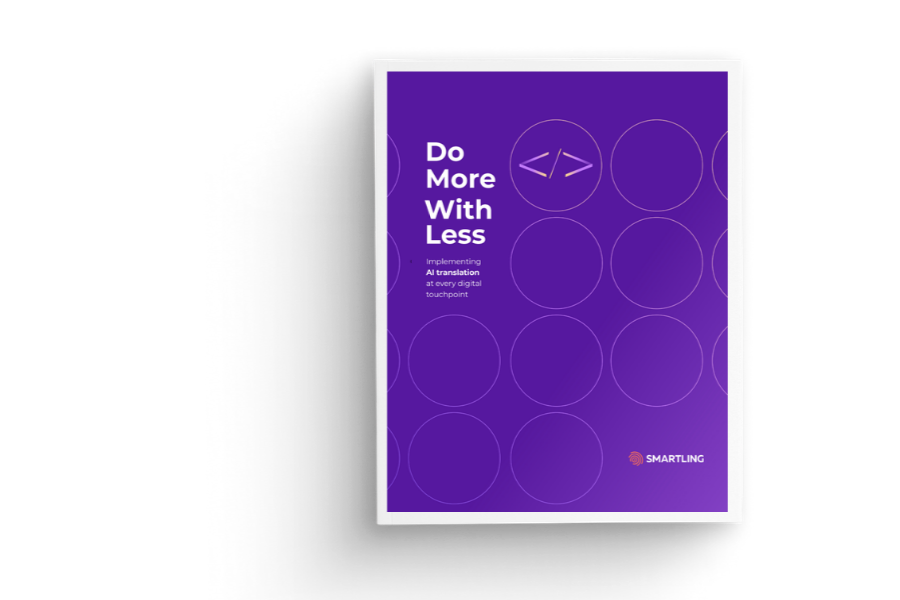
O e-book da Smartling, Faça mais com menos, compartilha uma estrutura prática para conectar Tradução de IA, automação de fluxo de trabalho e consistência em todos os pontos de contato digitais.
Pronto para fazer mais com menos?
Torne o gerenciamento de conteúdo multilíngue um sistema simplificado.
A gestão de conteúdo multilíngue é a forma como as empresas mantêm o conteúdo global consistente, atualizado e controlado em todas as equipes e sistemas. A Smartling apoia essa realidade integrando a tradução aos fluxos de trabalho e reutilizando a linguagem aprovada por meio de memória de tradução e recursos terminológicos, além de aplicar avaliações de qualidade estruturadas para que a publicação multilíngue possa ser ampliada.
Agende uma demonstração Descubra como a Smartling ajuda as empresas a expandir o conteúdo global, conectando a tradução aos sistemas que elas já utilizam, centralizando os recursos linguísticos e garantindo a qualidade em todas as etapas da publicação multilíngue.
Quando o conteúdo multilíngue se torna um sistema em vez de uma correria, a publicação global se torna mais fácil de replicar — em todas as equipes, mercados e ciclos de lançamento.